
Top 10 Tips For Testing Equipment For PAT in Tamworth
The UK's Portable Appliance Testing Programme (PAT) is based upon the proper selection, maintenance, and use of test equipment. Technicians' ability to conduct reliable and accurate safety testing is dependent entirely on the calibration and quality of their testing equipment. Equipment must be able perform the exact electrical test required by IET Code of Practice for Inspection and Testing of Electrical Equipment. The code is an industry standard for best methods. Each tool, from advanced portable testers as well as simple voltage indicators, plays an important part in checking the safety of electrical equipment. Understanding the capabilities, limitations, and legal requirements surrounding the equipment is crucial for any duty holder who wants to ensure that their test program is not just effective but also is legally sound and legal under the Electricity at Work Regulations 1989.
1. Portable Appliance Tester Tester in Tamworth
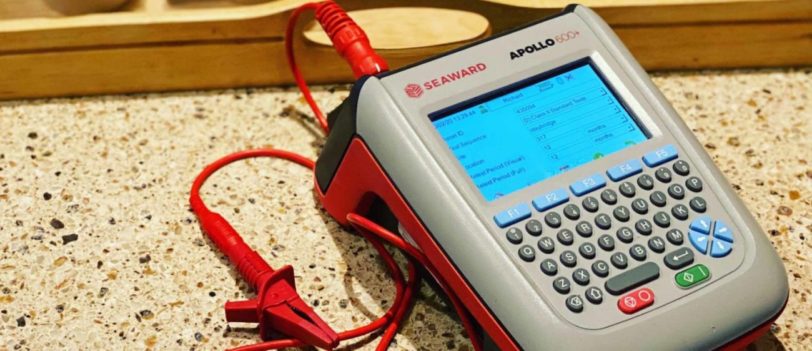
The most basic device is an automated one that performs a series of safety tests. Modern testers range from basic testers that run earth continuity, insulation resistance and test for lead polarity to advanced units offering additional tests like load/run current as well as earth leakage and the current of contact. The ability to run tests that are soft or replace leakage of sensitive electronic equipment (e.g. computers, printers) which could be damaged by high voltage during the insulation resistance test is a key characteristic. The tester chosen should be matched to the complexity of the appliance being test.
2. Annual calibration is required by an UKAS accredited laboratory in Tamworth
This is a mandatory requirement for the compliance of and due diligence. The United Kingdom Accreditation Service requires that the PAT test be regularly calibrated, typically every year through an accredited laboratory. This calibration verifies the accuracy of the device and its traceability to the national standards. The tester's provider must have an official calibration certificate for each tester they use. If you utilize a non- calibrated or uncalibrated device and the results are not valid, and there is no defence in the event that there is a problem.
3. Functionality and Daily/Pre-Use User Checks as well as Functionality Validation
Before testing can begin technicians must complete the daily function checks. This check is sometimes known as an "user's check" or an "verification". The test is carried out using a well-known "proof load", set of leads, or other known good item. If the test does not deliver the expected results for this item that is known to be reliable, it indicates a fault in the tester itself and it must not be used until serviced and calibrated. This is an important best practice to make sure that the device is working properly on the day of use.
4. The critical role of visual Inspection Equipment in Tamworth
The tools needed for a thorough inspection although often neglected by testers, are also essential. Included are screwdrivers that can be used to remove appliances and plugs, the right fuse rating for replacements, a label printing machine or labels pre-printed for asset identification and a torch for checking dark areas. The majority of the faults are detected at this point, and skimping on this step can severely impact the whole test procedure.
5. Test Leads and Adapters for Specialised Tests in Tamworth
A competent technician will have a complete set of test leads and adaptors that can be connected to any kind of appliance outlet. There are adaptors to connect detachable leads and test them, as well as adaptors that let you test the plug end. The inability to connect properly can result in an improper test being conducted or the test being skipped completely.
6. Earth Bond Test Lead: Its Importance in Class I Equipment
Earth bond tests are crucial for Class I devices (those that require the use of a safety earth). This test lead must be able to handle an enormous current (typically between 5-25A) in order to confirm a strong connection to the earth circuit. Low-quality leads or ones that aren't suitable to the current test could produce false readings and could create a deadly safety hazard. Technicians need to be aware of utilizing the right lead for this specific test.
7. Insulation Resistance Testing and Voltage Parameters
Insulation resistance tests test insulation integrity by applying a large DC current (typically 500V in most appliances) to the live and earth conductors. The technician must be aware of when this test can be conducted and when it should not (for instance, equipment that has surge protectors, or electronic devices that contain sensitive components, in which case an alternative leakage test will be more reliable). The device must be able to provide the test voltage required by the IET.
8. Presets of the instrument and their requirements for Pass/Fail in Tamworth
Test instruments that are reputable have pass/fail criteria built in based on limits specified in the IET code of conduct (e.g. earth bond resistance >0.1O +R, insulation resistance >1MO). Transparency is a requirement that the technician understands the preset limits and is not able to change them arbitrarily to ensure an acceptance. The provider needs to be able to verify that their equipment is in compliance with the industry standards for thresholds in order to guarantee reliable and justified results.
9. Data management and reporting Capabilities in Tamworth
Modern PAT testers have data loggers. They can save thousands or hundreds of test results. These can be uploaded to software to generate certification, asset lists and failure report generation. This functionality will be used by a transparent service provider to provide clear and detailed evidence of work performed. Paper-based record keeping can be prone to errors, loss and falsification, and it does not reflect the best practices of the industry.
10. Voltage Indicators & GS38 in Tamworth
A competent technician will use a PAT test as the primary instrument, but they also carry an additional voltage indicator, or voltstick, to ensure that all electrical connections are in good condition before touching them, especially when replacing plugs or examining problems. The second device should conform to HSE Guidance Note GS38, which outlines the requirements for safe design (e.g. finger guards or insulated probes, appropriate current fusing). This adds an additional layer of security for the person who is performing the test. View the most popular EICR inspections in Tamworth for more tips.
Ten Tips On The Best Tamworths To Service Fire Extinguishers in Tamworth
The Tamworth of your provider and the extent of its coverage for services have an impact on the quality, reliability and price of the security service you get. In the UK, compliance with the Regulatory Reform Order on Fire Safety 2005, which demands regular and timely maintenance The physical Tamworth and its logistical capabilities directly affect their ability to meet the statutory and contractual obligations. The decision between a national firm with extensive coverage or local specialists with deep regional knowledge involves careful consideration of the response time, emergency support feasibility as well as travel cost structures and a cultural understanding of regional requirements. A provider's operational footprint–their depot Tamworths, engineer distribution, and territory management–determines whether they can offer genuine rapid response or merely theoretical coverage, making this a critical factor in ensuring your premises remain protected and compliant without suffering from excessive downtime or hidden charges related to geographic constraints.
1. Local vs. National. local provider models of operation
In the UK market, you will see large national firms as well as smaller specialist firms that are localized. National companies typically work through regional depots and a distributed engineer network that provides consistent branding and the resources needed to handle large, multi-site contracts across the nation. The advantage of national suppliers is their scalability, and they often have solid backup systems. Local providers are able to provide in-depth knowledge of particular regions (e.g. Southeast Scotland, Scotland) which could result in a more personalised service, as well as extremely quick response times within their region of their core. It's important to understand whether the national company is effective in your particular area or if you're at the very edge of their service. This could mean a longer response time and higher mileage costs.
2. Engineer Density and Proximity Your Postcode
The most important factor in delivering practical service is having a permanent engineer at your Tamworth who's fully equipped. If the nearest engineer is located more than 2 hours away, it does not matter if a service provider claims "UK-wide coverage." You must specifically ask "Where is the closest engineer located to the postcode we live in?" Ask "How Many Engineers are there in my Geographic Zone?" The density of engineers in a given region can cut down travel time for scheduled visits and emergency responses and the risk of cancellations because of unexpected delays.
3. Mileage and Call-Out Charges Policy in Tamworth
Policies on mileage directly impact costs. Transparent providers will detail their policies in the quote. Most include a set number of "free" miles to the engineer's base or a local depot. Beyond this limit a per-mile additional fee will be imposed. The cost can be very high for those in remote or rural regions (e.g. rural Wales or the Scottish Highlands). You should be aware of the costs that could be incurred for your area. Some local service providers don't charge for mileage in the core county. This can be a huge cost saving for businesses within that region.
4. Regional Compliance Nuances and Regulations
There are important differences between the laws that govern fire safety in Great Britain. England and Wales are governed by the Regulatory Reform (Fire Safety) Order 2005. Scotland is governed by the Fire (Scotland) Act of 2005, and the regulations that accompany it. They differ in the way they approach compliance and documents. Northern Ireland has separate legislation. Office staff and engineers are trained on the regional nuances by an organization that has authentic coverage. This guarantees that your documentation and service procedures are in line with the local requirements of your enforcement authority.
5. Multi-Site Contract Management, National Account Coordination in Tamworth
For companies with multiple Tamworths throughout the UK (e.g. franchises, retail chains and property management companies), a provider's ability to offer seamless national account coordination is crucial. It is essential to have an integrated team of account managers, working together with coordinated network regional engineers. The provider should present a sophisticated system for scheduling and communication that will ensure an uniform delivery of services, a standardised price, and unified report, all through one point of contact, regardless of whether your sites are in London. Manchester. or Glasgow. The hassle of administration of managing multiple local contracts is removed.
6. Warehouse and Depot Infrastructure in Tamworth
Physical infrastructure is an indicator of service quality. Local depots don't just serve as offices for administrative purposes, but also act as vital logistics hubs in which extinguishers can be found, along with components and consumables. Engineers who are based close to a depot which is well-stocked will be able to quickly replenish and resolve many issues in the initial visit. Engineers may not have all the parts they need if a service provider is in your area, however their nearest warehouse could be hundreds of miles away. This can cause delays and repeated visits for small jobs.
7. Planning for the worst and redundant engineers in Tamworth
A strong coverage is contingent on contingency plans in case of illness or annual leave, or an unexpected demand. A provider with thin coverage in your area could have one engineer who is who is responsible for a large geographical area. If the engineer is not available and your service is scheduled to start, it could be delayed or cancelled due to an engineer travelling from a great distance which could compromise the quality. Each engineer of an organization is redundant. This guarantees continuity of service and protects your business from the pitfalls due to their internal resourcing issues.
8. Urban vs. Rural Service Challenges
The service requirements differ dramatically between rural and urban settings. Servicing an office within Central London involves challenges like congestion charges, ULEZ compliance requirements for vans and parking restrictions that can create additional costs and make scheduling difficult. Rural Tamworths present challenges of longer travel times, remote access, and potentially poor mobile coverage for engineers to update their job status. A provider with experience in your type of area will have a custom-made protocol and pricing that can handle these issues effectively.
9. Verification of Claims Coverage via Client References in Tamworth
It is crucial to confirm the assertions made by a provider. The most effective way to verify this is to inquire about clients' references that are located in your specific city or region. Talking to a local company will show the reality of the provider's service. Were they punctual? Was the engineer local to the area? Did you encounter an unexpected mileage cost? This is a great way to confirm (or prove or disprove) the claim of a provider's capabilities in your region.
10. Contractual Performance Guarantees in Tamworth
In addition, the promises of coverage that are made must be backed by contractual guarantees. The Service Level Agreements should include performance indicators for geographical areas. The SLA might, for example, guarantee that a scheduled maintenance service will be performed by an engineer based in a certain region or that an emergency call out is answered within a specified time by an identified local depot. By incorporating these KPIs into the contract will formalise provider coverage claims, and provide recourse for if they don't meet their commitments. Have a look at the top rated fire extinguisher inspection in Tamworth for site info.
